
Author: timdurman

  • The return of the piggybank?

    The return of the piggybank?

    We are all having to cope with rising costs and at a time when every penny seems to be accounted for to pay for food, fuel and other living costs, it would seem that building an emergency fund would be a little down the list of priorities.

    Yet, there has never been a more vital time to build up an emergency pot to cope with the more irregular costs that come up, such as car breakdowns, boiler servicing and Christmas presents.

    According to the Building Societies Association (BSA), more than a third (36%)1 of savers say they are relying on their savings to get them through the cost-of-living crisis. Given the concerns that incomes are not keeping up with rising costs, 13% of people who responded said they have no savings at all, while 33% said that if they lost their jobs and the income that provided, their savings would not cover their living costs for a month1.

    Before looking at whether the family budget can sustain the burden of diverting money specifically to savings, it is important to look at how economies can be made, especially in reviewing current borrowing – not just mortgages, but also outstanding loans and credit/ store cards too.

    However, it makes sense, not only to look at reviewing any existing borrowing, but also to build up a fund to help with unexpected bills, and something as simple as setting up a direct debit from your main bank current account to a secondary ‘piggy bank’ account can help, saving little and often every month to build up emergency savings that are there for when you need them.

    Sources

    1. Building Societies Association (2022) With a third of people relying on their savings to get by, UK Savings Week aims to help those who can get into a better savings habit. Available at: https://www.bsa.org.uk/media-centre/press-releases/with-a-third-of-people-relying-on-their-savings-to (Accessed 21 October 2022)

    All the information in this article is correct as of the publish date 28 October 2022. The opinions expressed in this publication are those of the authors. The information provided in this article, including text, graphics and images does not, and is not intended to, substitute advice; instead, all information, content and materials available in this article are for general informational purposes only. Information in this article may not constitute the most up-to-date legal or other information.
  • Understanding the energy price cap

    Understanding the energy price cap

    The news about increasing energy costs is understandably dominating the personal finance pages and has its roots in the conflict in Ukraine which has seen the Russian government reduce the amount of gas it exports to Europe in retaliation for the sanctions imposed on Russia for invading Ukraine1. The result is that, as we approach autumn and winter, demand for power is outstripping supply. Wholesale costs therefore rise and these increases are passed on to consumers.

    According to the Office of Gas and Electricity Markets (OFGEM), the government regulator for the electricity and downstream natural gas markets in Great Britain, the price cap for energy (as of the 1st of October 2022) is now called the Energy Price Guarantee. It is described by OFGEM on their website as follows:-

    “To help protect consumers, the Government has announced the Energy Price Guarantee which comes into effect on 1 October 2022.

    This new scheme will reduce the unit cost of electricity and gas so that a household with typical energy use in Great Britain pays, on average, around £2,500 a year on their energy bill.”

    On average usage, a household will save £1,000 a year (based on current prices from October). Energy suppliers will be fully compensated by the government for the savings delivered to households. 

    For an individual customer, the amount paid under the Energy Price Guarantee will vary depending on how much energy they use, where they live, how they pay for their energy and their metering arrangement. The £2,500 figure is based on a household with typical consumption on a dual electricity and gas bill paying by direct debit.’

    There is, however, a common misunderstanding about the Energy Price Guarantee. The £2,500 figure is an average maximum of what households could be paying but not a maximum cap on costs, and is based on a typical consumption of a household on a dual electricity and gas bill paying by direct debit.

    According to OFGEM’s website, from the 1st October, the costs are:-

    Electricity 
     
    £0.34 per/kWh
     Daily standing charge: £0. 46
     Gas£0.10 per kWh
     Daily standing charge: £0. 28

    This means that while your supplier cannot charge anymore per unit, you are still responsible for how many units you use. So, without changing how you manage power in your house, you bills could very well exceed the £2500 average annual maximum cost that the government is predicting the average householder will have to pay. 

    Sources

    1. BBC (2022) What is the energy price cap and what will happen to bills? Available at: https://www.bbc.co.uk/news/business-58090533 (Accessed 28 October 2022).
    2. OFGEM (2022) Energy Price Cap Explained. Available at: https://www.ofgem.gov.uk/information-consumers/energy-advice-households/check-if-energy-price-cap-affects-you (Accessed 28 October 2022)

    All the information in this article is correct as of the publish date 28 October 2022. The opinions expressed in this publication are those of the authors. The information provided in this article, including text, graphics and images does not, and is not intended to, substitute advice; instead, all information, content and materials available in this article are for general informational purposes only. Information in this article may not constitute the most up-to-date legal or other information.

  • There’s Plenty of Mortgage Options Available

    There’s Plenty of Mortgage Options Available

    Although the media has been reporting some negative changes in the mortgage market, there are plenty of products available, and options out there to suit your circumstances.

    The mortgage market is currently experiencing some strange and unusual conditions. This is due to several factors, such as increasing Bank of England interest rates, which have led to an unprecedented surge in demand for mortgages as homebuyers seek to secure a deal should rates change again further.

    Some mortgage lenders are repricing their products to manage demand, whilst a few lenders have pulled products altogether to allow them to catch up on existing applications and give time to reassess the situation before relaunching again, potentially with a revised rate structure1.

    This may only be affecting a small number of products, however if you are thinking about applying for a mortgage, it’s a good idea to act quickly as the process may take longer and there could be further pricing changes in the near future.

    As your mortgage adviser, we are always here to support you and provide quality mortgage advice and work together to find the most suitable solution for your individual circumstances.

    Source

    Wood, Z. (2022) UK mortgage market turmoil: what does it mean for your deal?. Available at: https://www.theguardian.com/money/2022/sep/27/uk-mortgage-deal-banks-building-societies-interest-rate-rises (Accessed 28/09/22)

    All the information in this article is correct as of the publish date 30 September 2022. The opinions expressed in this publication are those of the authors. The information provided in this article, including text, graphics and images does not, and is not intended to, substitute advice; instead, all information, content and materials available in this article are for general informational purposes only. Information in this article may not constitute the most up-to-date legal or other information.

  • Why are house prices so high and property so scarce?

    Why are house prices so high and property so scarce?

    One of the key questions that is frequently asked by many, is why are UK house prices reaching such high levels, with soaring increases seen each year? There are many common theories given to a question such as this, whether it’s ‘greedy’ second homeowners out-pricing locals, ‘selfish’ older homeowners not downsizing to allow a new generation to aspire to larger properties, or landlords buying up property, putting it out of reach for ‘ordinary’ buyers and first-time buyers.

    All of the above reasons may well be valid, but it’s easy to get overly emotive on the topic, and to miss the overall picture, which is ultimately based on supply and demand. Looking through a purely economic lens, for the housing market in the UK, the shortage of supply means that for as long as people have the means and desire to buy, the prices of available property will continue to increase.  

    Not enough houses are being built to meet demand and as with all other commodities where demand outstrips supply, the importance of that commodity is expressed in terms of its value put upon it by potential buyers.

    As we enter the final quarter of the year with a new King and a new Prime Minister, it is good to see that housebuilding statistics have turned positive. The National House-Building Council (NHBC) reported that 40,289 new homes were completed by the end of the second quarter of 2022. This represents a 16% rise compared to the same period last year1, which is great news for potential homebuyers, as it helps to try and tame the otherwise skyrocketing property prices in the UK.

    Furthermore, figures for the number of new homes that are registered – but not yet built – total 66,855, which represents a 45% increase on 2021. The largest increase in new home completions can be found in North East and the East Midlands, compared to the NHBC’s data from last year1.

    Whilst the UK property has continued to see strong growth this year, with demand 20% higher than during the pandemic2, it is hoped that the growth in homebuilding does start to provide some opportunity for both existing homebuyers and first-time-buyers to get onto the property ladder.

    If you’re interested in finding out more about moving, whether you’re seeking a new build home or an existing property, please don’t hesitate to get in touch for an appointment to review your current circumstances and answer any questions you may have.

    Sources

    1 – NHBC (2022) New home completions return to pre-pandemic levels in Q2. Available at: https://www.nhbc.co.uk/media-centre/statistics/2022/08/11/new-home-completions-return-to-pre-pandemic-levels-in-q2 (Accessed 26/09/22)

    2 – Landberg, R. (2022) UK House Asking Prices Rebound With Strongest Growth Since May. Available at: https://www.bloomberg.com/news/articles/2022-09-25/uk-house-asking-prices-rebound-with-strongest-growth-since-may (Accessed 26/09/22)

    All the information in this article is correct as of the publish date 30 September 2022. The opinions expressed in this publication are those of the authors. The information provided in this article, including text, graphics and images does not, and is not intended to, substitute advice; instead, all information, content and materials available in this article are for general informational purposes only. Information in this article may not constitute the most up-to-date legal or other information.
  • Are your elderly relatives receiving all their winter benefits?

    Are your elderly relatives receiving all their winter benefits?

    Predictions of a tough winter with rising fuel costs are at the front of many people’s minds, but especially the elderly. Energy bills are due to go up again in October which means that warming up the house will be much more expensive than it was last year1. However, the Government is offering a number of winter benefits to those who are eligible.

    According to the British Heart Foundation, lower temperatures can increase the risk of illness, including heart attacks, strokes, flu and pneumonia – especially for those with pre-existing health conditions and the elderly2.  The World Health Organisation advises that dwellings should be heated to at least 18C over the winter months3 – but these costs can add up quickly and in dire circumstances, many elderly people might have to choose between heating and eating, if some of the more vocal tabloids are to be believed. Regardless of the severity in real terms, the elderly on fixed incomes are going to be the most likely to be affected and it those which the government is targeting with a range of benefits.

    Winter Fuel Payment

    The Winter Fuel Payment is a tax-free benefit available to anyone born on or before September 25, 1956. Eligible Britons can get between £250 to £600 depending on age and personal circumstances to put towards heating costs.4  

    Most eligible households will get the payment automatically, but people may need to claim it if they don’t receive any benefits or a state pension.

    To claim, call the Winter Fuel Payment Centre on 0800 731 0160 or visit the Government website https://www.gov.uk/winter-fuel-payment

    Cold Weather Payment

    Cold Weather Payments are paid automatically to those eligible, based on a person’s benefits and the temperature in their area5. https://www.gov.uk/cold-weather-payment

    Affordable Warmth Obligation (ECO)

    The Affordable Warmth Obligation helps those on low incomes keep their homes warm, various domestic energy suppliers may fund certain energy-saving improvements6.

    Those who claim certain benefits and live in either private or social housing may get support, including insulation improvements and boiler replacements or repairs. https://www.gov.uk/energy-company-obligation

    Sources

    1 – Tapper, J. (2022) Energy price rises: what will happen to UK households on 1 October? Available at: https://www.theguardian.com/money/2022/sep/25/energy-price-rises-what-will-happen-to-uk-households-on-1-october (Accessed 26/09/22)

    2 – British Heart Foundation (2022) Will cold weather affect my heart condition? Available at: https://www.bhf.org.uk/informationsupport/support/practical-support/will-cold-weather-affect-my-heart-condition (Accessed 26/09/22)

    3 – Gov.uk (2022) Minimum Home Temperature Thresholds for Health in Winter. Available at: https://assets.publishing.service.gov.uk/government/uploads/system/uploads/attachment_data/file/776497/Min_temp_threshold_for_homes_in_winter.pdf (Accessed 26/09/22)

    4 – Gov.uk (2022) Winter Fuel Payment. Available at: https://www.gov.uk/winter-fuel-payment (Accessed 26/09/22)

    5 – Gov.uk (2022) Cold Weather Payment. Available at: https://www.gov.uk/cold-weather-payment (Accessed: 26/09/22)

    6 – Gov.uk (2022) Help from your energy supplier: the Energy Company Obligation. Available at: https://www.gov.uk/energy-company-obligation (Accessed 26/09/22)

    All the information in this article is correct as of the publish date 30 September 2022. The opinions expressed in this publication are those of the authors. The information provided in this article, including text, graphics and images does not, and is not intended to, substitute advice; instead, all information, content and materials available in this article are for general informational purposes only. Information in this article may not constitute the most up-to-date legal or other information.

  • Smart Meters – worth the hassle?

    Smart Meters – worth the hassle?

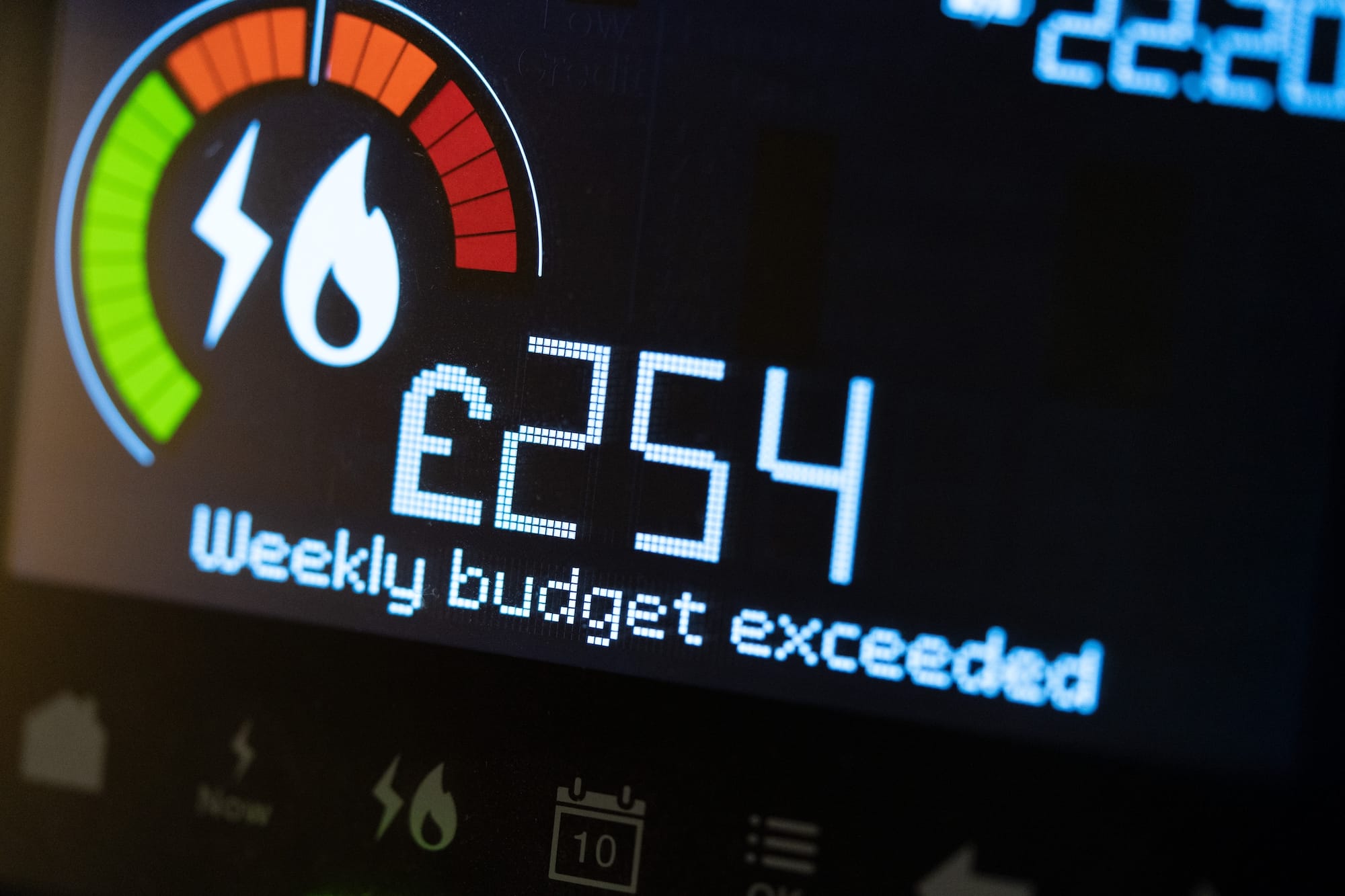
    Government figures show that the popularity of smart meters is growing and that they now make up 50% of all energy meters in the UK1. At a time when energy costs are rising, the government advice, backed up by extensive press and TV advertising, is that by replacing traditional gas and electricity meters with smart meters, consumers can understand more about the energy they use day-to-day and cut out unnecessary usage and spending.

    The government claims that smart meters are underpinning the UK’s transition to a greener, more reliable energy system and their rollout will deliver more benefits to the country than it will cost. However, privacy campaigners have raised concerns about potential issues, while questions have been asked about the technology’s effectiveness.

    But what are the pros and cons?

    PROS

    Reading the meter – As smart meters are linked to the supplier, the days of being disturbed by a meter reader making a physical inspection of your meters to calculate bills are long gone. Having a smart meter should mean that the cost saving of not having to employ someone to read an old-style meter will be passed on to the customer.

    Real time monitoring – The display that comes with a smart meter helps consumers understand how much energy they are using in real time. So users can monitor exactly what is being used by any particular appliance and therefore manage their use more efficiently.

    No more estimated bills – Forgetting to submit a reading on an old-style meter meant that the energy supplier would estimate usage based on past bills. These estimates can be inaccurate and lead to an unexpectedly high bill when an official reading is applied.
    A smart meter sends an accurate reading of precise energy use to the supplier on a half-hourly, daily or monthly basis, so users are only charged for what they actually use.

    CONS

    Privacy – concerns have been raised that smart meter information relating to customers’ energy usage could be passed on to third parties without customers’ permission.
    Constant checking – having the ability to know exactly which appliances use how much energy can lead to a compulsion to check the meter constantly to see how much energy their household is using at any given time.

    Switching suppliers – if you switch suppliers, you might find that your smart meter loses its functionality. There are two types of smart meters on the market: SMETS1 and SMETS2. If you have a first-generation SMETS1 it might not work with a new supplier meaning a return to manually reading of the meter.2

    Sources

    1 – Gov.uk (2022) Smart Meter Statistics in Great Britain: Quarterly Report to end December 2021. Available at: https://assets.publishing.service.gov.uk/government/uploads/system/uploads/attachment_data/file/1059591/Q4_2021_Smart_Meters_Statistics_Report.pdf (Accessed 26/09/22)

    2 – Ovo Energy (2021)  SMETS1 & SMETS2: Everything you need to know about the different types of smart meters. Available at: https://www.ovoenergy.com/guides/energy-guides/smets-1-and-2-new-smart-meter-generation (Accessed 26/09/22)

    All the information in this article is correct as of the publish date 30 September 2022. The opinions expressed in this publication are those of the authors. The information provided in this article, including text, graphics and images does not, and is not intended to, substitute advice; instead, all information, content and materials available in this article are for general informational purposes only. Information in this article may not constitute the most up-to-date legal or other information.

  • Will removing the ‘stress test’ make homebuying more affordable?

    Will removing the ‘stress test’ make homebuying more affordable?

    We have all witnessed the rise in house prices in recent times, affecting so many people, not only those currently renting and first-time buyers, but existing homeowners seeking to move up the property ladder to allow for growing families or those looking to find a property that will suit them in old age.

    Property price increases have many knock-on impacts, with the average detached house price increasing by over £60,000 during the Covid pandemic1, the cost of upscaling to a larger home simply became unaffordable for many. According to analysis carried out by Santander, fuelled by a demand for more space at home, record numbers of applications were made to extend homes instead of moving since 2020.2 Furthermore, the end of last year’s Stamp Duty holiday has meant that the demand for moving home this year has fallen by a third since 2021, according to an analysis of the figures released by HM Revenue & Customs.3

    The other factor that inhibits more home ownership is being able to afford the repayments on a mortgage, especially with the interest rate rises seen this Summer in 2022. House prices are generally seen to be placing burdens, particularly on first time buyers who, even before they talk to an adviser about a mortgage, often struggle to pull together the money for a deposit.

    Since 2014 lenders have had to make sure that they ‘stress test’ applicants’ ability to be comfortable paying their mortgage if and when rates rise by 3% from their starting rate. At the beginning of August, the Bank of England (BoE) decided to abolish the need for lenders to continue stress testing in this way. Other statutory requirements, such as borrowing no more than 4.5 times income remain in place alongside other considerations.

    These tests were put in place after the 2007-08 financial crisis, part of a package of measures designed to prevent lending that had got out of control in the run-up to the crash.

    Industry commentators as a whole believe that the Bank’s decision to remove the stress test may not be as reckless as sounds, and the market is not turning into a free-for-all, with lenders still utilising their own forms of testing, but to varying degrees according to their own perceptions of risk. The changes are expected to potentially make it slightly easier for some borrowers to get a mortgage, however the biggest constraint on new mortgages is likely to remain that of borrowers affording the initial deposit.4

    Sources

    1 – Coombe-Whitlock, C. (2022) House prices UK: Homeowners struggle to upscale as ‘fierce’ demand for larger properties forces prices higher. Available at: https://inews.co.uk/inews-lifestyle/money/property-and-mortgages/house-prices-uk-homeowners-upscale-demand-larger-properties-price-higher-1428976 (Accessed 22nd August 2022)

    2 – Santander, Press Releases – Home improvement lives on in busy property market as Brits apply to extend their homes by over 1.5 million sq metres in lockdown. (2020) https://www.santander.co.uk/about-santander/media-centre/press-releases/home-improvement-lives-on-in-busy-property-market-as (Accessed 22nd August 2022)

    3 – Denton, J. (2022) House prices have continued to soar but property sales are down by more than a third since last year’s stamp duty break home buying surge. Available at: https://www.thisismoney.co.uk/money/mortgageshome/article-10739119/End-stamp-duty-break-sees-property-sales-fall-third.html (Accessed 22nd August 2022)

    4 – Read, S. (2022) Mortgage affordability test scrapped by Bank of England. Available at: https://www.bbc.co.uk/news/business-62353114 (Accessed 22nd August 2022)

  • Energy Bills – The Do’s and Definitely Don’ts

    Energy Bills – The Do’s and Definitely Don’ts

    If the existing price rises weren’t already enough, the average British household energy bill is estimated to surge above £5,000 per year in 2023, according to analysts at independent energy consultancy, Auxilione1. They predict that Ofgem will likely raise the price cap for the average UK household to the £5,000 mark from April next year1.

    With summer giving way to autumn soon, the impact of weather changes and the consequent increased use of electricity and gas will soon make themselves felt. We are facing a situation where there is a genuine concern as to how many households will cope with the increased burden. Fuel poverty is recognised to be where a family is spending more than 10% of its household budget on energy2 and using those metrics, it means that two thirds of the country could be pushed into fuel poverty in 20233.

    Regardless of whether you feel your household will be able to weather the storm after such a long period of price stability, there is no doubt that the feelings of shock and anger are not helped by stories of the record profits being made by the large energy suppliers, though some of those reports refer to oil companies and those providing petrol and diesel at the pump4.

    Some of the anger has been redirected into trying to create a mass movement to force providers to lower their prices. Don’t Pay UK, a grassroots organisation is encouraging energy customers to stop paying for their energy on 1st October. This is the date when the new energy price cap will take effect. Their idea is to create a group, the larger the better, which would all cancel the direct debit arrangements with their providers at the same time. The aim being to make the providers rethink their pricing with the threat of mass non-payment as a bargaining position.   

    While it might seem to be a justifiable position, the effects of non-payment can be serious.

    • Missed payments can be marked as defaults on your credit report
    • Your debt can be passed on to a debt collection agency
    • Your energy company could apply to a court to get a county court judgement (CCJ) against you.

    If any of the above happened, it could mean you might struggle to get good rates on loans and credit cards or even be refused, which in turn would mean struggling to rent a property or obtain a mortgage.

    While it is unlikely that your supply would be cut off, one of the best ways to manage your energy bills in the event of hardship is, rather than taking direct action, is to talk to your supplier.

    If you believe you may have challenges paying your energy bills this Winter, there is more information about any discounts and payments that you may be entitled to on the UK Government website. Visit https://www.gov.uk/government/news/400-energy-bills-discount-to-support-households-this-winter to find out more.

    Sources

    1 – Sheppard, D & Parker, G. (2022) British energy bills forecast to soar above £5,000 next year. Available via Google search or direct FT subscriber link at: https://www.ft.com/content/048c0271-75d3-4d4e-9a00-e8fd0bf62691 (Accessed 22nd August 2022)

    2 – Turn 2 Us (2022) Fuel Poverty – What is Fuel Poverty?. Available at: https://www.turn2us.org.uk/Benefit-guides/Fuel-Poverty/What-is-fuel-poverty (Accessed 22nd August 2022)

    3 – Crerar, P. (2022) Two-thirds of UK families could be in fuel poverty by January, research finds. Available at: https://www.theguardian.com/society/2022/aug/17/two-thirds-of-uk-families-could-be-in-fuel-poverty-by-january-research-finds (Accessed 22nd August 2022)

    4 – Demianyk, G. (2022) Why Are Energy Bills Rising When Suppliers Are Making Record Profits?. Available at: https://www.huffingtonpost.co.uk/entry/energy-prices-rising-suppliers-record-profits_uk_62f41502e4b0ab35e0afbcb7 (Accessed 22nd August 2022)

  • Is it time to switch your mortgage?

    Is it time to switch your mortgage?

    At the beginning of August, the mortgage industry regulator, The Financial Conduct Authority (FCA), published a statement estimating that there are approximately 370,000 borrowers who could save money by switching their mortgage.1

    The FCA also gave insight into the savings that can be made across the nation – amongst the 370,000 homeowners highlighted that over a period of two years, 110,000 are estimated to save less than £500 per year, 150,000 of them could be missing out on the chance to save over £1,000 per year, and another 110,000 homeowners potentially could save between £500- £1,000 per year1.

    The research states that 74% of homeowner’s mortgages “are on fixed rates, typically fixed between 2-5 years”1, though if yours is coming to an end soon, it’s advisable to start thinking about what comes next, and that it’s generally recommended to seek specialist mortgage and protection advice from those within the industry before making any decisions.

    Given the rising cost of living, it’s never been more important to consider your options to ensure that your mortgage fits your exact circumstances. We are aiming to do everything we can to support our clients through this challenging period, so please do not hesitate to contact us and arrange an appointment to talk more about your arrangements and how our expertise could help you.

    Sources

    1 – Financial Conduct Authority (2022) Switching in the mortgage market – an update. Available at: https://www.fca.org.uk/publication/research/switching-in-the-mortgage-market-update-august-2022.pdf (Accessed 22nd August 2022)

  • Budgeting and insuring a new university student

    Budgeting and insuring a new university student

    If you have a freshly-minted university undergraduate in the family who is probably leaving home for the first time, there is much to look forward to, but also much to organise to ensure a smooth transition into their university life.

    Most parents have passed on the key basics of money management to their children, but this will probably be the first time they have had to manage not only their own personal spend, but also be responsible and pay for essentials such as food and utility bills, for example.

    Budgeting

    While it is impossible to be precise before getting to University, working out an outline budget beforehand is still a good idea – even a rough idea of how much money will be needed and how much is available each week might help the new student avoid blowing their budget early.

    Make one list of all monthly income from student loans or any part time work, followed by one laying out every expense that can be thought of. It should include (but not be limited to) staples like rent, bills and food, books, miscellaneous fees, travel costs and laundry.

    Starting out with a plan enables the student to have a clearer picture by subtracting expenses from income and being able to manage any money left over for luxuries like entertainment and clothes, for example.

    Insurance

    Let’s not forget other costs that will arise in the event of having personal belongings stolen while away from home. Would they be covered for their laptop, phone and tablet which are usually essential items on every campus? Have they added up the total value of their belongings that might include bicycles and even cars?

    According to a survey by Save the Student, 7% of students have been burgled while at university, with fresher’s week being a prime time with so many new students moving in and bringing expensive gadgets and property with them.1

    A first port of call would be to check your own contents insurance to see if your child’s belongings are covered away from your home. If they are not, the insurer might be able to add an extension clause which would cover them and to which your child could contribute.

    If the above is not possible, the next step might be to speak to a specialist insurance broker to find the right cover. There may also be discounted deals available to students via their university – the enrolment documents and student packs supplied may contain details here.

    It’s worth remembering that there will be exclusions and regardless of the quality of the cover, students must appreciate that it is their responsibility to look after their belongings. Leaving flat or house doors unlocked and not leaving a car or bike securely parked for instance, often will mean that insurance would be invalidated.

    Sources

    1 – Save The Student (2022) Student contents insurance 2022. Available at: https://www.savethestudent.org/accommodation/student-contents-insurance.html (Accessed 22nd August 2022)