
Category: News

  • Are your elderly relatives receiving all their winter benefits?

    Are your elderly relatives receiving all their winter benefits?

    Predictions of a tough winter with rising fuel costs are at the front of many people’s minds, but especially the elderly. Energy bills are due to go up again in October which means that warming up the house will be much more expensive than it was last year1. However, the Government is offering a number of winter benefits to those who are eligible.

    According to the British Heart Foundation, lower temperatures can increase the risk of illness, including heart attacks, strokes, flu and pneumonia – especially for those with pre-existing health conditions and the elderly2.  The World Health Organisation advises that dwellings should be heated to at least 18C over the winter months3 – but these costs can add up quickly and in dire circumstances, many elderly people might have to choose between heating and eating, if some of the more vocal tabloids are to be believed. Regardless of the severity in real terms, the elderly on fixed incomes are going to be the most likely to be affected and it those which the government is targeting with a range of benefits.

    Winter Fuel Payment

    The Winter Fuel Payment is a tax-free benefit available to anyone born on or before September 25, 1956. Eligible Britons can get between £250 to £600 depending on age and personal circumstances to put towards heating costs.4  

    Most eligible households will get the payment automatically, but people may need to claim it if they don’t receive any benefits or a state pension.

    To claim, call the Winter Fuel Payment Centre on 0800 731 0160 or visit the Government website https://www.gov.uk/winter-fuel-payment

    Cold Weather Payment

    Cold Weather Payments are paid automatically to those eligible, based on a person’s benefits and the temperature in their area5. https://www.gov.uk/cold-weather-payment

    Affordable Warmth Obligation (ECO)

    The Affordable Warmth Obligation helps those on low incomes keep their homes warm, various domestic energy suppliers may fund certain energy-saving improvements6.

    Those who claim certain benefits and live in either private or social housing may get support, including insulation improvements and boiler replacements or repairs. https://www.gov.uk/energy-company-obligation

    Sources

    1 – Tapper, J. (2022) Energy price rises: what will happen to UK households on 1 October? Available at: https://www.theguardian.com/money/2022/sep/25/energy-price-rises-what-will-happen-to-uk-households-on-1-october (Accessed 26/09/22)

    2 – British Heart Foundation (2022) Will cold weather affect my heart condition? Available at: https://www.bhf.org.uk/informationsupport/support/practical-support/will-cold-weather-affect-my-heart-condition (Accessed 26/09/22)

    3 – Gov.uk (2022) Minimum Home Temperature Thresholds for Health in Winter. Available at: https://assets.publishing.service.gov.uk/government/uploads/system/uploads/attachment_data/file/776497/Min_temp_threshold_for_homes_in_winter.pdf (Accessed 26/09/22)

    4 – Gov.uk (2022) Winter Fuel Payment. Available at: https://www.gov.uk/winter-fuel-payment (Accessed 26/09/22)

    5 – Gov.uk (2022) Cold Weather Payment. Available at: https://www.gov.uk/cold-weather-payment (Accessed: 26/09/22)

    6 – Gov.uk (2022) Help from your energy supplier: the Energy Company Obligation. Available at: https://www.gov.uk/energy-company-obligation (Accessed 26/09/22)

    All the information in this article is correct as of the publish date 30 September 2022. The opinions expressed in this publication are those of the authors. The information provided in this article, including text, graphics and images does not, and is not intended to, substitute advice; instead, all information, content and materials available in this article are for general informational purposes only. Information in this article may not constitute the most up-to-date legal or other information.

  • Smart Meters – worth the hassle?

    Smart Meters – worth the hassle?

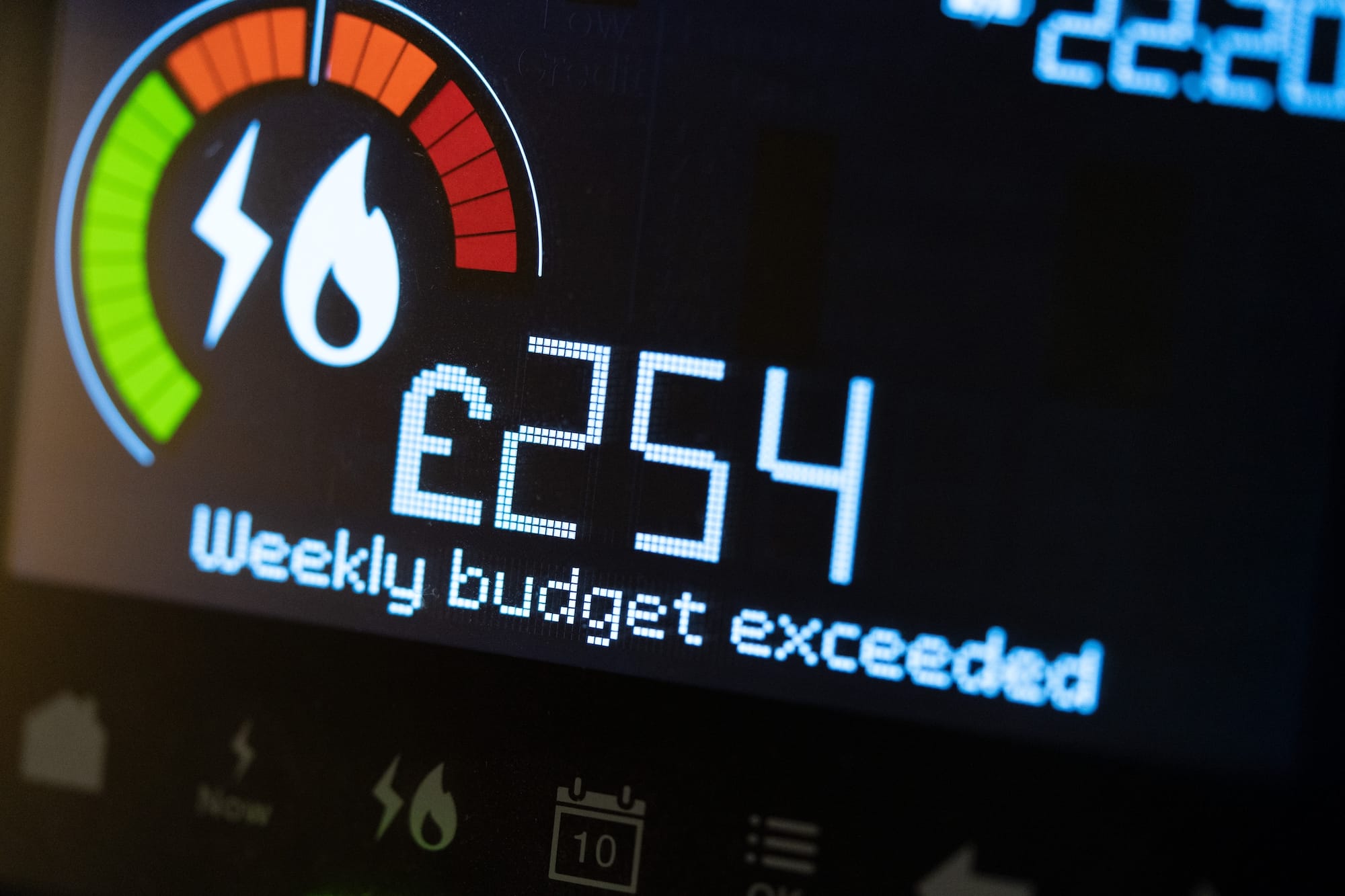
    Government figures show that the popularity of smart meters is growing and that they now make up 50% of all energy meters in the UK1. At a time when energy costs are rising, the government advice, backed up by extensive press and TV advertising, is that by replacing traditional gas and electricity meters with smart meters, consumers can understand more about the energy they use day-to-day and cut out unnecessary usage and spending.

    The government claims that smart meters are underpinning the UK’s transition to a greener, more reliable energy system and their rollout will deliver more benefits to the country than it will cost. However, privacy campaigners have raised concerns about potential issues, while questions have been asked about the technology’s effectiveness.

    But what are the pros and cons?

    PROS

    Reading the meter – As smart meters are linked to the supplier, the days of being disturbed by a meter reader making a physical inspection of your meters to calculate bills are long gone. Having a smart meter should mean that the cost saving of not having to employ someone to read an old-style meter will be passed on to the customer.

    Real time monitoring – The display that comes with a smart meter helps consumers understand how much energy they are using in real time. So users can monitor exactly what is being used by any particular appliance and therefore manage their use more efficiently.

    No more estimated bills – Forgetting to submit a reading on an old-style meter meant that the energy supplier would estimate usage based on past bills. These estimates can be inaccurate and lead to an unexpectedly high bill when an official reading is applied.
    A smart meter sends an accurate reading of precise energy use to the supplier on a half-hourly, daily or monthly basis, so users are only charged for what they actually use.

    CONS

    Privacy – concerns have been raised that smart meter information relating to customers’ energy usage could be passed on to third parties without customers’ permission.
    Constant checking – having the ability to know exactly which appliances use how much energy can lead to a compulsion to check the meter constantly to see how much energy their household is using at any given time.

    Switching suppliers – if you switch suppliers, you might find that your smart meter loses its functionality. There are two types of smart meters on the market: SMETS1 and SMETS2. If you have a first-generation SMETS1 it might not work with a new supplier meaning a return to manually reading of the meter.2

    Sources

    1 – Gov.uk (2022) Smart Meter Statistics in Great Britain: Quarterly Report to end December 2021. Available at: https://assets.publishing.service.gov.uk/government/uploads/system/uploads/attachment_data/file/1059591/Q4_2021_Smart_Meters_Statistics_Report.pdf (Accessed 26/09/22)

    2 – Ovo Energy (2021)  SMETS1 & SMETS2: Everything you need to know about the different types of smart meters. Available at: https://www.ovoenergy.com/guides/energy-guides/smets-1-and-2-new-smart-meter-generation (Accessed 26/09/22)

    All the information in this article is correct as of the publish date 30 September 2022. The opinions expressed in this publication are those of the authors. The information provided in this article, including text, graphics and images does not, and is not intended to, substitute advice; instead, all information, content and materials available in this article are for general informational purposes only. Information in this article may not constitute the most up-to-date legal or other information.

  • Will removing the ‘stress test’ make homebuying more affordable?

    Will removing the ‘stress test’ make homebuying more affordable?

    We have all witnessed the rise in house prices in recent times, affecting so many people, not only those currently renting and first-time buyers, but existing homeowners seeking to move up the property ladder to allow for growing families or those looking to find a property that will suit them in old age.

    Property price increases have many knock-on impacts, with the average detached house price increasing by over £60,000 during the Covid pandemic1, the cost of upscaling to a larger home simply became unaffordable for many. According to analysis carried out by Santander, fuelled by a demand for more space at home, record numbers of applications were made to extend homes instead of moving since 2020.2 Furthermore, the end of last year’s Stamp Duty holiday has meant that the demand for moving home this year has fallen by a third since 2021, according to an analysis of the figures released by HM Revenue & Customs.3

    The other factor that inhibits more home ownership is being able to afford the repayments on a mortgage, especially with the interest rate rises seen this Summer in 2022. House prices are generally seen to be placing burdens, particularly on first time buyers who, even before they talk to an adviser about a mortgage, often struggle to pull together the money for a deposit.

    Since 2014 lenders have had to make sure that they ‘stress test’ applicants’ ability to be comfortable paying their mortgage if and when rates rise by 3% from their starting rate. At the beginning of August, the Bank of England (BoE) decided to abolish the need for lenders to continue stress testing in this way. Other statutory requirements, such as borrowing no more than 4.5 times income remain in place alongside other considerations.

    These tests were put in place after the 2007-08 financial crisis, part of a package of measures designed to prevent lending that had got out of control in the run-up to the crash.

    Industry commentators as a whole believe that the Bank’s decision to remove the stress test may not be as reckless as sounds, and the market is not turning into a free-for-all, with lenders still utilising their own forms of testing, but to varying degrees according to their own perceptions of risk. The changes are expected to potentially make it slightly easier for some borrowers to get a mortgage, however the biggest constraint on new mortgages is likely to remain that of borrowers affording the initial deposit.4

    Sources

    1 – Coombe-Whitlock, C. (2022) House prices UK: Homeowners struggle to upscale as ‘fierce’ demand for larger properties forces prices higher. Available at: https://inews.co.uk/inews-lifestyle/money/property-and-mortgages/house-prices-uk-homeowners-upscale-demand-larger-properties-price-higher-1428976 (Accessed 22nd August 2022)

    2 – Santander, Press Releases – Home improvement lives on in busy property market as Brits apply to extend their homes by over 1.5 million sq metres in lockdown. (2020) https://www.santander.co.uk/about-santander/media-centre/press-releases/home-improvement-lives-on-in-busy-property-market-as (Accessed 22nd August 2022)

    3 – Denton, J. (2022) House prices have continued to soar but property sales are down by more than a third since last year’s stamp duty break home buying surge. Available at: https://www.thisismoney.co.uk/money/mortgageshome/article-10739119/End-stamp-duty-break-sees-property-sales-fall-third.html (Accessed 22nd August 2022)

    4 – Read, S. (2022) Mortgage affordability test scrapped by Bank of England. Available at: https://www.bbc.co.uk/news/business-62353114 (Accessed 22nd August 2022)

  • Energy Bills – The Do’s and Definitely Don’ts

    Energy Bills – The Do’s and Definitely Don’ts

    If the existing price rises weren’t already enough, the average British household energy bill is estimated to surge above £5,000 per year in 2023, according to analysts at independent energy consultancy, Auxilione1. They predict that Ofgem will likely raise the price cap for the average UK household to the £5,000 mark from April next year1.

    With summer giving way to autumn soon, the impact of weather changes and the consequent increased use of electricity and gas will soon make themselves felt. We are facing a situation where there is a genuine concern as to how many households will cope with the increased burden. Fuel poverty is recognised to be where a family is spending more than 10% of its household budget on energy2 and using those metrics, it means that two thirds of the country could be pushed into fuel poverty in 20233.

    Regardless of whether you feel your household will be able to weather the storm after such a long period of price stability, there is no doubt that the feelings of shock and anger are not helped by stories of the record profits being made by the large energy suppliers, though some of those reports refer to oil companies and those providing petrol and diesel at the pump4.

    Some of the anger has been redirected into trying to create a mass movement to force providers to lower their prices. Don’t Pay UK, a grassroots organisation is encouraging energy customers to stop paying for their energy on 1st October. This is the date when the new energy price cap will take effect. Their idea is to create a group, the larger the better, which would all cancel the direct debit arrangements with their providers at the same time. The aim being to make the providers rethink their pricing with the threat of mass non-payment as a bargaining position.   

    While it might seem to be a justifiable position, the effects of non-payment can be serious.

    • Missed payments can be marked as defaults on your credit report
    • Your debt can be passed on to a debt collection agency
    • Your energy company could apply to a court to get a county court judgement (CCJ) against you.

    If any of the above happened, it could mean you might struggle to get good rates on loans and credit cards or even be refused, which in turn would mean struggling to rent a property or obtain a mortgage.

    While it is unlikely that your supply would be cut off, one of the best ways to manage your energy bills in the event of hardship is, rather than taking direct action, is to talk to your supplier.

    If you believe you may have challenges paying your energy bills this Winter, there is more information about any discounts and payments that you may be entitled to on the UK Government website. Visit https://www.gov.uk/government/news/400-energy-bills-discount-to-support-households-this-winter to find out more.

    Sources

    1 – Sheppard, D & Parker, G. (2022) British energy bills forecast to soar above £5,000 next year. Available via Google search or direct FT subscriber link at: https://www.ft.com/content/048c0271-75d3-4d4e-9a00-e8fd0bf62691 (Accessed 22nd August 2022)

    2 – Turn 2 Us (2022) Fuel Poverty – What is Fuel Poverty?. Available at: https://www.turn2us.org.uk/Benefit-guides/Fuel-Poverty/What-is-fuel-poverty (Accessed 22nd August 2022)

    3 – Crerar, P. (2022) Two-thirds of UK families could be in fuel poverty by January, research finds. Available at: https://www.theguardian.com/society/2022/aug/17/two-thirds-of-uk-families-could-be-in-fuel-poverty-by-january-research-finds (Accessed 22nd August 2022)

    4 – Demianyk, G. (2022) Why Are Energy Bills Rising When Suppliers Are Making Record Profits?. Available at: https://www.huffingtonpost.co.uk/entry/energy-prices-rising-suppliers-record-profits_uk_62f41502e4b0ab35e0afbcb7 (Accessed 22nd August 2022)

  • Is it time to switch your mortgage?

    Is it time to switch your mortgage?

    At the beginning of August, the mortgage industry regulator, The Financial Conduct Authority (FCA), published a statement estimating that there are approximately 370,000 borrowers who could save money by switching their mortgage.1

    The FCA also gave insight into the savings that can be made across the nation – amongst the 370,000 homeowners highlighted that over a period of two years, 110,000 are estimated to save less than £500 per year, 150,000 of them could be missing out on the chance to save over £1,000 per year, and another 110,000 homeowners potentially could save between £500- £1,000 per year1.

    The research states that 74% of homeowner’s mortgages “are on fixed rates, typically fixed between 2-5 years”1, though if yours is coming to an end soon, it’s advisable to start thinking about what comes next, and that it’s generally recommended to seek specialist mortgage and protection advice from those within the industry before making any decisions.

    Given the rising cost of living, it’s never been more important to consider your options to ensure that your mortgage fits your exact circumstances. We are aiming to do everything we can to support our clients through this challenging period, so please do not hesitate to contact us and arrange an appointment to talk more about your arrangements and how our expertise could help you.

    Sources

    1 – Financial Conduct Authority (2022) Switching in the mortgage market – an update. Available at: https://www.fca.org.uk/publication/research/switching-in-the-mortgage-market-update-august-2022.pdf (Accessed 22nd August 2022)

  • Budgeting and insuring a new university student

    Budgeting and insuring a new university student

    If you have a freshly-minted university undergraduate in the family who is probably leaving home for the first time, there is much to look forward to, but also much to organise to ensure a smooth transition into their university life.

    Most parents have passed on the key basics of money management to their children, but this will probably be the first time they have had to manage not only their own personal spend, but also be responsible and pay for essentials such as food and utility bills, for example.

    Budgeting

    While it is impossible to be precise before getting to University, working out an outline budget beforehand is still a good idea – even a rough idea of how much money will be needed and how much is available each week might help the new student avoid blowing their budget early.

    Make one list of all monthly income from student loans or any part time work, followed by one laying out every expense that can be thought of. It should include (but not be limited to) staples like rent, bills and food, books, miscellaneous fees, travel costs and laundry.

    Starting out with a plan enables the student to have a clearer picture by subtracting expenses from income and being able to manage any money left over for luxuries like entertainment and clothes, for example.

    Insurance

    Let’s not forget other costs that will arise in the event of having personal belongings stolen while away from home. Would they be covered for their laptop, phone and tablet which are usually essential items on every campus? Have they added up the total value of their belongings that might include bicycles and even cars?

    According to a survey by Save the Student, 7% of students have been burgled while at university, with fresher’s week being a prime time with so many new students moving in and bringing expensive gadgets and property with them.1

    A first port of call would be to check your own contents insurance to see if your child’s belongings are covered away from your home. If they are not, the insurer might be able to add an extension clause which would cover them and to which your child could contribute.

    If the above is not possible, the next step might be to speak to a specialist insurance broker to find the right cover. There may also be discounted deals available to students via their university – the enrolment documents and student packs supplied may contain details here.

    It’s worth remembering that there will be exclusions and regardless of the quality of the cover, students must appreciate that it is their responsibility to look after their belongings. Leaving flat or house doors unlocked and not leaving a car or bike securely parked for instance, often will mean that insurance would be invalidated.

    Sources

    1 – Save The Student (2022) Student contents insurance 2022. Available at: https://www.savethestudent.org/accommodation/student-contents-insurance.html (Accessed 22nd August 2022)

  • House prices – Up or Down?

    House prices – Up or Down?

    Homeowners, along with those trying to get on the property ladder, will already be tuned into the debate over whether house prices will continue to rise or that we are likely to have a fall or a gentler readjustment. It’s thought that some first-time buyers could hold off as they wait to see what happens to the market.1

    The difficulties faced by first time buyers are already well known with prices having continued to track higher while incomes and deposits have failed to keep pace1. But are we now getting near a tipping point where a house price fall could become a reality?

    On the one hand, we have reports from leading economists that tell us that UK house prices will fall by up to 10pc as interest rate rises will cause a global property crash2.

    However, a report from Ernst & Young in June predicts that UK house prices will rise 8% over the course of 2022, followed by growth of 1.8% and 1.2% in 2023 and 20243.

    That prediction strongly contradicts the kind of contraction outlined by Capital Economics above despite the evidence of inflationary pressures and a cost of living squeeze. So, who is right?

    Ernst & Young points out that while growth in house prices will be slowed down over the next three years by stretched affordability, rising mortgage rates and falling household incomes, the perennial issue of the shortage of housing stock, low unemployment and the unequal effects of cost of living pressures will stop prices from falling3.

    Estate agencies are also reporting a drop in new instructions. A recent survey by the estate agency Savills found that nine in 10 current house hunters have had their search affected by a lack of available properties4. In addition, the trade body Propertymark reported its members had an average of 22 properties for sale per branch in May, compared to 50 in a normal year5.

    With two contradictory views from professional researchers above, at this time, provided there is an imbalance between supply and demand, property prices will continue to be stable in the short term. Making longer term predictions however, with the economic situation so volatile, could be very much a gambler’s punt.

    Sources

    1. Smith, H (2022) When will house prices fall?. Available at:  https://www.thetimes.co.uk/money-mentor/article/will-house-prices-drop/#:~:text=This%20could%20in%20turn%20push,falling%20by%205%25%20in%202023 (Accessed 26th Jul 2022)
    2. Canocchi, C. (2022) Boom to Bust? House prices in Britain could fall up to 10% ‘soon’ Economists warn. Available at: https://www.thisismoney.co.uk/money/mortgageshome/article-11002381/House-prices-fall-10-soon-rates-rise-economists-warn.html (Accessed 26th Jul 2022)
    3. Ernst & Young (2022) UK house prices set for continued growth despite economic slowdown, says EY. Available at: https://www.ey.com/en_uk/news/2022/06/uk-house-prices-set-for-continued-growth-despite-economic-slowdown-says-ey-item-club (Accessed 26th Jul 2022)
    4. Shaw, V (2022) Nine in 10 house-hunters say lack of stock is negatively affecting search. Available at: https://www.independent.co.uk/money/nine-in-10-househunters-say-lack-of-stock-is-negatively-affecting-search-b2019546.html (Accessed 26th Jul 2022)
    5. PropertyMark (2022) Housing Report May 2022. Available at: https://www.propertymark.co.uk/asset/0E44995C-CE61-4474-8111311A757495C2/ (Accessed 26th Jul 2022)
  • Cutting costs without compromising security

    Cutting costs without compromising security

    There is an old saying about not throwing the baby out with the bathwater  – unknowingly getting rid of something valuable while disposing of items of no value. It holds particularly true in the current situation where families are adjusting to the cost of living rises and looking to reduce household costs in order to cope with demands on the family purse.

    The financial regulator, the Financial Conduct Authority (FCA), is concerned that families and those most affected by the current economic climate might look at cutting insurance policies which could put them at risk, should the worst happen1.

    Already, we are seeing the effect of families and individuals cutting back on items such as petrol and diesel where sales fell by 4.3% in June as prices at the pumps hit new records, according to monthly retail data2. Clothing sales also dropped by 4.7%, with reports from retailers to the Office for National Statistics indicating that people are cutting back on retail spending due to concerns over what they could afford3.

    The FCA’s concern is that the rise in the cost of living will make the vulnerable more likely to cancel or cut back on personal insurances for homes and cars, as well as for life assurance. However, it is worth knowing that insurers do already offer support schemes for vulnerable customers, which were put in place during the pandemic1.

    Graeme Trudgill, executive director at the British Insurance Brokers Association (BIBA) said customers that cut back on their insurance cover as a result of cost of living pressures “may miss out on vital insurance cover when they need it most.” This can then create other problems, too, given that motor insurance is a legal requirement and buildings insurance is often a condition of homeowners’ mortgage contracts1.

    Customers who move to a lower priced insurance contract might also be left short if the worst happens. Underinsurance, where customers reduce the financial cover and leave themselves unable to meet the full cost of repair or replacement after an accident, is already evident in 40-45 per cent of claims, according to BIBA’s figures1.

    If you’re seeking to prioritise your monthly expenditure and have concerns or queries about your existing insurance payments, we encourage you to book an appointment with us to review your circumstances. We’ll take the time to give bespoke advice to help ensure that the policies you hold will continue to fit your individual needs and can provide sufficient cover for when you may rely on them the most.

    Sources

    1. Smith, I. & Walker, O. (2022) Cost of living crisis could force consumers to cut back on insurance, FCA warns. Available via Google search or direct FT subscriber link at: https://www.ft.com/content/b4246b26-cef3-4522-8236-b00a633b62a2  (Accessed 26th Jul 2022)
  • Review Your Mortgage

    Review Your Mortgage

    With UK interest rates rising in recent months, the impact on mortgage rates is already being felt across the country as short term and fixed rates increase.1 According to Moneyfacts, the average cost of two-year fixed rate mortgage has risen for the past eight months to 3.25%2.

    However, research from UK Finance reports that 74 per cent of homeowner mortgages are already on a fixed rate contract, with 96 per cent of new borrowers choosing this option since 2019. Therefore, a sizeable majority of borrowers will see no immediate increase in their monthly repayments3.

    Fixed rate mortgages will remain at the same interest rate until the term ends, however if you have a variable or tracker rate then it is likely you will have already seen an increase in your monthly repayments.

    Approximately 850,000 mortgage borrowers have a tracker rate mortgage currently according to UK Finance. The recently announced 0.25% increase to 1.25% in Bank Base Rate means that on a tracker currently at 2.25%, the interest rate would rise to 2.5%, adding £18 a month to a £150,000 mortgage arranged over 20 years2.

    We urge you to make an appointment to review your mortgage with us to ensure that your current deal fits your exact circumstances at this moment in time. Regardless of what type of mortgage you have, there has never been a better time to make sure you are in the best position to weather the current economic uncertainty.

    Sources

    1. Romei, V. (2022) UK Mortgage rates rise at highest rate in a decade. Available at: https://www.ft.com/content/c41094b4-050d-4522-88ad-fc9a9829bd80 (Accessed 26th Jul 2022)
  • New build property – a better choice?

    New build property – a better choice?

    In a perfect world, should aspiring homeowners or next time buyers buy an existing property, or opt for a new build?

    Much depends on location, access to amenities and of course personal taste, but here are some pros and cons which might help.

    New build property comes with a 10-year NHBC warranty to cover structural problems [1] and developers may provide their own additional warranties to provide additional peace of mind, for a set time period[2].

    Although developers have been slow to respond to ‘green’ issues3, new builds are now more likely to have higher energy efficiency to comply with the latest building regulations. This means that they are more energy efficient than older properties and therefore may result in lower energy bills. Data from Energy Performance Certificates shows that 85% of new homes have the highest A or B ratings. That compares to just 2.2% of existing properties[4][5].

    New builds, depending on the developer, can be customised if you are buying off plan where the property is still at an early stage in the build. This means that you can choose fixtures and fittings to suit your taste.

    With a new build property there is no upward chain to worry about that might hold up the purchase.[4] Some developers may run schemes to buy a buyer’s existing house/flat at market value to speed up the sale. They may also offer incentives such as paying stamp duty costs or conveyancing fees.

    On the other side of the coin, new build homes may bring a list of snags that need correction. Even the best new build home may still feature doors getting stuck on new carpets or a loose tile, so it’s worth having a snagging survey undertaken as soon as your developer lets you on site[4].

    According to a report from insurer LV, more than 5,000 new homes in flood-risk areas of England have been granted planning permission so far this year[6], and could be seen as a way for local authorities to tackle the housing shortage.

    So much depends on choosing the right developer if new build is what buyers want, and doing some homework by looking at their previous developments, checking their track record on complaints and the speed with which they deal with snags and faults can lead to better choices.

    Time and money may not be wasted by doing proper due diligence before committing to a new build purchase, because the advantages could far outweigh the potential issues.

    Sources

    1. NHBC (2022) Providing Protection for Homeowners. Available at: https://www.nhbc.co.uk/homeowners (Accessed 26th Jul 2022)