Category: News

  • Considering a remortgage to fund home improvements?

    Considering a remortgage to fund home improvements?

    Considering a remortgage to fund home improvements?

    As we move deeper into Spring, the weather is becoming more pleasant and many of us will be thinking about making improvements to our homes. Yes, the DIY and home improvement season is upon us. But do you know how you can raise the finance?

    Many homeowners remortgage to fund home improvements because interest rates tend to be lower than on personal loans or credit cards.But remortgaging will depend on your property, your existing mortgage loan, and your current financial situation. Whether it’s a new bathroom, kitchen, loft conversion or extension, you’ll need to think about the best way of funding your home improvement project.

    Important things to consider when remortgaging to finance home improvements

    Affordability: if you increase the amount you are borrowing on your mortgage, your monthly payments will rise. Before agreeing to a remortgage in these circumstances, the lender will check your income is high enough to afford the new payments after all your other outgoings have been deducted.

    Cost of the home improvements: It’s very important to consider the cost of your proposed home improvements, and whether you can finance the amount required from a remortgage. A lender will consider the cost of the home improvements in their assessment to give you an idea of the amount that you will need to get from remortgaging.

    Credit history: Your credit score is a primary factor in the lender’s decision whether to approve your remortgage. It pays to do some homework beforehand to understand how lenders see you and your credit status to avoid any nasty shocks later in the application process.

    Equity: A lender would be unlikely to approve a remortgage deal if you are in negative equity, i.e. if your property value has fallen since purchase. Although generally UK property prices have continued to rise in recent years, it is an important detail to consider before proceeding.2

    Financial circumstances: When obtaining a remortgage, whether it’s a new deal with your existing lender, or a brand new lender, your financial situation will be reassessed and details such as late or missed mortgage payments may result in lenders turning down your application. Those lenders that accept borrowers with mortgage payment issues may charge higher rates than mainstream lenders.

    Type of property: Consider whether your home improvements will add value to your home. A local estate agent can help you assess whether you will see a return on your investment if that’s important to you.

    5 reasons to stay in your home and carry out home improvements

    1. You could add value to your property
    2. Create more living space
    3. Stay in your current location
    4. Stay near to schools
    5. You could save money on the cost of moving home

    If you are considering a remortgage or the alternative of a second charge loan, as a means of financing your dream home improvements, please get in touch and we can look at your situation and advise the most suitable course of action to take.

    Sources

    1. Sproson, K. (2022) Should you remortgage?. Available at: https://www.moneysavingexpert.com/mortgages/why-remortgage/ (Accessed 25th April 2022)
    2. Bown, J. (2020) Understanding Negative Equity – and how to get out of it. Available at: https://www.moneysupermarket.com/mortgages/negative-equity/ (Accessed 25th April 2022)

  • Should you be worried about Inheritance Tax?

    Should you be worried about Inheritance Tax?

    “Inheritance Tax is something only ‘rich’ people have to pay”, may be the response most people would make and yet it might be closer to being a part of your life than you think.

    Inheritance Tax (IHT) is a tax on the estate of someone who has died, including all property, possessions, and money. The standard IHT rate is 40%1.  It is charged on the part of your estate that is above the tax-free threshold which is currently £325,000. If you leave your main home to children or grandchildren, you could benefit from an additional £175,000 allowance.2

    However, it was announced in the 2021 budget that the IHT thresholds would be frozen until 2026. That five-year freeze is significant, and it is advisable to review your situation in light of this announcement because currently, although only 3.7% of UK deaths in 2018/192 resulted in an IHT charge, if property prices continue to rise as they have in recent years, then this may mean more estates are pushed over the allowance threshold.3

    If we factor in the increasing value of property and the potential of inheriting during your lifetime, the risk merits a review with an adviser. However, there are actions you can take to reduce or even eliminate the threat.

    • Potentially exempt transfer (PET)

    You can make a gift or make a transfer of ownership, which, provided you survive for a further seven years has the potential to be exempt if you survive seven years from the date of the gift. If you die within seven years, the PET becomes potentially chargeable and is added to the value of your estate to calculate an IHT liability. However, it may benefit from a reduction in tax depending on the number of years the individual survived since the gift was made.

    • Leave a legacy to charity
    • Put your assets into a trust for your heirs
    • Leave your estate to your spouse or civil partner
    • Pay money into a pension instead of a savings account
    • You can give away a total of £3,000 worth of gifts each tax year without them being added to the value of your estate. This is known as your ‘annual exemption’. You can give gifts or money up to £3,000 to one person or split the £3,000 between several people.1

    As every situation is different, it is important to seek independent tax advice from your financial adviser or from an accountant to ensure that your individual situation is assessed correctly.

    Sources

    1. Gov.uk (2022) How Inheritance Tax Works. Available at: https://www.gov.uk/inheritance-tax (Accessed 26th April 2022)
  • Scams you need to guard against

    Scams you need to guard against

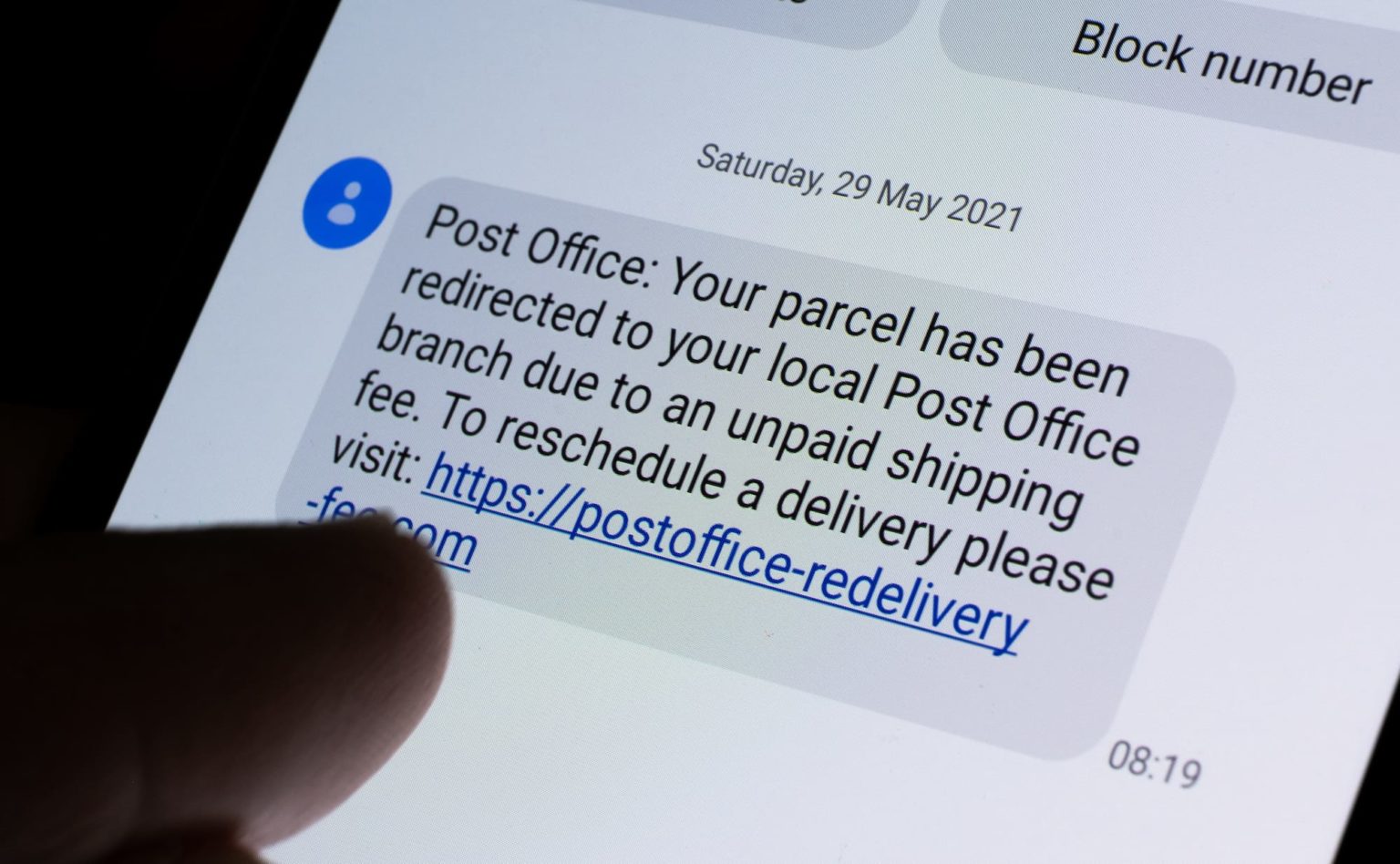
    1. Free voucher scams

    With so many people looking for ways to save money, the ‘free voucher’ scam is one to watch out for. Social media websites are home to some of the most plausible including:

    • Mitchells & Butlers’ Toby Carvery restaurant chain warned that fraudsters are using fake Facebook pages to encourage victims to enter their personal details to sign up for vouchers.1
    • JD Wetherspoons, the pub chain closed down its social media accounts four years ago but it hasn’t stopped fraudsters from setting up false accounts offering free food vouchers in exchange for comments on posts and personal information.1
    • Similarly, supermarket chain Morrisons does NOT offer free food and vouchers in exchange for likes or shares on Facebook posts despite frequent scam posts circulating on social media.1

    2. Health related scams

    It is estimated that £34.5m has been taken from people concerned about their health, especially during COVID.2

    While some of these will be losing their potency as the COVID rules are being relaxed, the way that they have played and continue to play on the natural fears of victims show how they could be quickly adapted by fraudsters in the event of a COVID return or another pandemic.

    Vaccine passports are available for free through the NHS app. Criminals are still targeting victims by selling fake vaccination passports.1

    Coronavirus vaccine appointment scam texts and emails are still going out encouraging people to provide their bank details in order to book an appointment for their vaccine.1

    Fake hand sanitiser – People have been targeted with fake adverts for cheaper Covid-related products such as hand sanitiser. Some items contained 37% of the highly toxic banned substance methanol. Others also did not even contain enough ethanol to be effective against COVID.1

    3. Travel scams

    As the world has started to get back to some form of reality, fraudsters are taking advantage of people booking flights and holidays. Airlines like Jet2 are warning customers to only contact them on their official email accounts because fraudsters are putting up false contact details which link customers to call centres where they are asked for personal information.1

    Top tips to save you from the scammers

    1. If an offer sounds too good to be true, it probably is.
    2. Always log onto a website directly rather than by clicking on links in an email, and make sure the website is secure.
    3. Keep your wallet shut. Don’t hand over cash or sign anything until you are happy about the business with which you are dealing.
    4. Never send money to anyone you don’t know or trust.
    5. Protect your personal information. Never give banking or personal details to anyone you don’t know.
    6. Be password smart. Don’t pick your birthday or phone number and don’t use the same password for different sites and change them regularly.

    Sources

    1. Frost, G. (2021) Ten financial scams to avoid. Available at https://www.thetimes.co.uk/money-mentor/article/ten-financial-scams/ (Accessed 25th April 2022)
    2. Simmons, D. & Quinton, M. (2021) Covid Fraud: £34.5m stolen in pandemic scams. Available at: https://www.bbc.co.uk/news/technology-56499886 (Accessed 25th April 2022)
  • Garden improvements to add value to your home

    Garden improvements to add value to your home

    The Covid-19 lockdowns reminded us of why open space is so important to our sense of well-being and it is noteworthy that as lockdowns were eased, the main requirement for people looking to move home was the need for open space.1

    This is why the value of well kept outdoor space has begun to be measured in respect of the individual components that buyers are looking for. The garden has become a valuable asset and additional means of increasing the value of your home when it comes time to sell and move on.

    Nationwide Building Society recently commissioned a survey by Censuswide into the garden improvements that add the most amount of value to a home in 2022.2 At the top of the list was a conservatory, which on average, could increase the value of your home by almost £8,500. An office in the garden and gym room followed close behind, making up the rest of the top three garden features that could add the most value to your property. With so many of us working from home more than ever before, a lot of people are now willing to pay more for a property which allows them to work and exercise in comfort. 

    The survey also found that by having a home office in the garden, it could increase the value of your property by around £7,261, while a gym or studio room could increase your home’s worth by £7,124, on average.2

    Several entertainment features, including an outdoor kitchen, outdoor entertaining or dining area, and a hot tub also made the top 10 most prized garden improvements. Having these features in your garden could increase the value of your property by up to £6,500 on average, according to the Nationwide survey.2

    In total, the Nationwide research identified 19 garden improvements, with a vegetable patch, newly painted fences and a well-kept lawn also making the list.

    Of course, neglecting your garden space could also significantly decrease the value of your home. A mouldy or dirty conservatory roof could decrease the value of your house by £6,140, with damaged garden walls next, with an average decrease in value of just under £6,000.2 Broken guttering, cracked or damaged patios and damaged decking could cost you dearly.

    Of course, in the end, with property values at an all-time high3, demand for property is outstripping supply and the value of your property could be determined by the desire to buy as much as by the additional features that you may offer.

    Sources

    1. Office for National Statistics (2021) How has lockdown changes our relationship with nature? Available at: https://www.ons.gov.uk/economy/environmentalaccounts/articles/howhaslockdownchangedourrelationshipwithnature/2021-04-26 (Accessed 26th April 2022)
    2. Nationwide Building Society survey with Censuswide (2022) The Garden Trends That Add The Most Value to Your Home in 2022. Extract available at https://www.roofingmegastore.co.uk/garden-trends-2022 (Accessed 25th April 2022).
  • 2022 Spring Statement Summary

    2022 Spring Statement Summary

    Today, Rishi Sunak, the chancellor of the exchequer unveiled his spring statement against a backdrop of rising fuel, energy and food costs. We wanted to provide you with a summary of the most poignant points that were made in today’s speech.

    Fuel duty cut by 5p per litre

    In response to rising fuel paces, the chancellor announced a 5p per litre cut to fuel duty which is “the biggest cuts to all fuel duty rates ever”. The cut will come into force at 18:00 tonight and last until March next year.

    0% VAT on energy-saving materials

    For the next five years, homeowners will pay 0% VAT on energy saving materials, such as solar panels or heat pumps. The chancellor says he can make the move as a result of Brexit.

    Doubles household support fund

    Money for councils to support vulnerable households will be doubled to £1bn from April.

    Reiterates overall ambition to reduce taxes.

    Moving onto the tax system, Sunak reiterates his overall ambition to reduce taxes. He says he is publishing a tax plan today, with a “principled approach” to cutting taxes over this Parliament. This will first help families, then create conditions for higher growth, he says.

    National Insurance and income tax threshold is raised.

    The chancellor announced that the threshold for paying National Insurance will increase by £3,000 from July 2022. “From this July, people will be able to earn £12,570 a year without paying a single penny of income tax or National Insurance”, he says. “That’s a £6bn personal tax cut for 30 million people across the United Kingdom. “A tax cut for employees worth over £330 a year”. He adds: “The largest increase in a basic rate threshold ever, and the largest single personal tax cut in a decade”.

    Basic rate of tax cut by 2024

    In his final announcement, Rishi Sunak said that before the end of this Parliament in 2024, “for the first time in 16 years” the basic rate of income tax will be cut from 20p to 19p in the pound. He added: “A tax cut for workers, for pensioners, for savers. A £5bn tax cut for over 30 million people.”

    Support for business

    Sunak pledges that the government will reform the generosity of tax credits on the money private firms spend on research and development. He also says the government will cut tax rates on business investment, with details to be set out at the Budget in the autumn.

    The Employment Allowance will increase to £5,000, claiming it is a tax cut worth up to £1,000 for half a million small businesses. The new amount will come into place in two weeks’ time.

  • The Bank of England raises interest rates to 0.75%

    The Bank of England raises interest rates to 0.75%

    Interest rates have increased for the third time in four months as the Bank of England tries to calm the rise in the cost of living. We wanted to write to you to explain how that might affect your mortgage. The increase to 0.75% from 0.5% comes as households face soaring energy bills, fuel, and rising costs to the weekly shop.

    The good news is that if your mortgage is on a fixed rate, your monthly repayments are unaffected. So, along with the other c.74% of mortgage holders who are on fixed rate deals your foresight in fixing your repayments will now prove its value. People with fixed rate mortgages are likely to be affected once they reach the end of their current deal. An interest rate rise could make remortgaging more expensive.

    If you have a variable rate tracker mortgage that is linked to the BoE base rate, you are likely to see an immediate impact on the amount you repay. Those on a standard variable rate (SVR) could see an increase which is decided by the lender. If you are unsure, it is worth checking your mortgage terms and conditions in your mortgage offer document.

    If you are on your lenders SVR, please ensure that you get in touch as you could be paying more than you need to be.

    However, further rate increases cannot be ruled out and whatever your mortgage type, we strongly recommend you look at the terms of your mortgage and contact your financial adviser, who can review your mortgage needs for the future and help you plan to be in the best position to cope with the current turbulence in financial markets. It’s always a very good idea to have a financial plan in place to deal with any potential interest rate changes.

  • Interest rate rises could mean millions of households facing a mortgage shock

    Interest rate rises could mean millions of households facing a mortgage shock

    With Bank of England interest rates increasing to 0.5% in February1, millions of households may now be feeling the additional squeeze on the cost of living as their monthly mortgage payments rise, according to trade body, UK Finance2.

    Furthermore, their findings reveal that one in four mortgage borrowers on variable rate deals will be immediately affected by the rise, and millions more once their existing fixed rate mortgage terms are due for renewal.

    The February 2022 interest rate rise, made by the Bank of England increased rates by 0.25% to the current 0.5%. Although sounding a small increase, the change will have an impact for many, especially those already feeling the squeeze with rising energy bills and coping with the after-effects of the Covid-19 pandemic.

    The rate increases mean that a homeowner with a £150,000 mortgage would typically have to pay an extra £21 a month, or £252 a year, according to figures from brokers London & Country3.

    Rising costs across the board

    This adds on to the increasing energy costs, driven by the recent removal of the energy price cap, which means that the average household can expect to see increases of £1,200 a year, according to think-tank Resolution Foundation4. Elsewhere, the rising inflation, which has been the highest in 30 years5 means that we will all see the effects of rising prices across products and services in daily life.

    Review your mortgage now

    With so much change, it’s a good time to review your mortgage to make sure that you’re not paying any more than you need to.

    Those most affected by the changes are homeowners with a variable rate mortgage, linked to interest rates, however those on fixed rate period mortgages may start to see changes over time too. We advise that you get in contact with us to talk through your existing mortgage and let us check that you’re on the most suitable deal for your current circumstances.

    Sources

    1 –   Bank of England (2022) Interest rates and Bank Rate. Available at: https://www.bankofengland.co.uk/monetary-policy/the-interest-rate-bank-rate (Accessed 16th Feb 2022)

    2 –  UK Finance (2021) How the Bank Rate Affects Mortgage Rates. Available at: https://www.ukfinance.org.uk/news-and-insight/blogs/how-the-bank-rate-affects-mortgage-rates (Accessed 16th Feb 2022)

    3 –  Duncan, H. (2022) City experts say interest rates could increase five times this year as Bank of England battles against inflation. Available at: https://www.thisismoney.co.uk/money/markets/article-10454913/Rates-rise-FIVE-times-year-ward-inflation.html (Accessed 16th Feb 2022)

    4 – Resolution Foundation (2022) 2022 Set to be the Year of the Squeeze. Available at: https://www.resolutionfoundation.org/press-releases/2022-set-to-be-the-year-of-the-squeeze-as-wages-stall-and-families-face-a-1200-hit-from-next-april-as-energy-bills-and-taxes-rise/ (Accessed 16th Feb 2022)

    5 – Giles, C. (2022) UK Inflation Jumps to highest level in 30 years. Available at: https://www.ft.com/content/9188e191-4c1c-4968-a3af-9a43f086de6b (Accessed 16th Feb 2022)

  • Government support due to the energy crisis – do you qualify?

    Government support due to the energy crisis – do you qualify?

    In the wake of the spiralling cost of energy which has quadrupled in the past year1, regulator Ofgem has announced an increase to the energy price.

    This will see almost a £700 increase in energy bills for the average household from April 1st. The government has moved to help offset the price increases through the targeted Energy Bills Rebate, which will mean that according to the government up to 28 million households will receive funding to reduce this cost2.

    The government has stated that every domestic electricity customer will get £200 off their energy bills, with 80% of households receiving a £150 Council Tax rebate from April.

    Energy suppliers will apply the discount to domestic electricity customers from October, with the Government meeting the costs. However, it is important to understand that the discount is not free. The discount will be automatically recovered from customers’ bills in equal £40 instalments over the next five years. This will begin from 2023, when global wholesale gas prices are expected to come down.

    Additionally, there will be council tax rebates made available. Householders in England, who are in council tax bands A-D, will receive a £150 rebate. The rebate to bills will be made directly by local authorities from April. This will not need to be repaid. According to the government, this one-off payment will benefit around 80 per cent of all homes in England.

    It had been argued that a cut in VAT on energy bills would be a viable tactic to help reduce costs, but the government claims that its rebate scheme and is more generous and more targeted towards lower-income families than a VAT cut on energy bills3.

    There is concern that there will be many owners of property outside the A-D bands who are on fixed incomes, such as the retired, who will also suffer hardship. However, the government has set aside a discretionary fund of £144 million to support those who pay council tax for properties in Bands E-H. Whether this will be enough only time will tell.

    Make sure you check whether you are eligible but while the council tax rebate is non repayable, remember that the £200 rebate will be repaid by customers in instalments from 2023.

    Sources

    1 – MacDonald, P. &  Brown, S. (2022) UK electricity prices quadrupled in 2021. Available at: https://ember-climate.org/commentary/2022/01/14/uk-electricity-prices-fossil-gas/ (Accessed on 16th Feb 2022)

    2 – HM Treasury (2022) Millions to receive £350 boost to help with rising energy costs. Available at: https://www.gov.uk/government/news/millions-to-receive-350-boost-to-help-with-rising-energy-costs (Accessed on 16th Feb 2022)

    3 – Kumar, C., Caddick, D. & Stirling A. (2022) The Unequal Impact of the Energy Bill Crisis. Available at: https://neweconomics.org/2022/01/the-unequal-impact-of-the-energy-bill-crisis (Accessed 16th Feb 2022)

  • Taxes are increasing this year

    Taxes are increasing this year

    It is likely that 2022 might see an end to lockdowns, but the residual economic repercussions are going to be felt in all of our pockets this year.

    Not only are we facing increases in the cost of electricity and gas but are also looking at the effect of inflation on our savings and spending power. Inflation is predicted to go as high as 7%1. However, it is also important to look at the extra taxation we are now facing from April 2022.

    Analysis by investment platform AJ Bell suggests that households face a likely £2417 cost of living increase when cost of living rises are taken into account2.

    National Insurance

    From the 6th April 2022 to 5 April 2023 National Insurance contributions will increase by 1.25 percentage points3. The increase will apply to employees (Class 1) and the self-employed (Class 4) as well as to employers (Class 1, 1A and IB) but will not apply to workers who are over the state pension age.

    The official reason for the increase is described as a levy to go towards the NHS, health, and social care.

    It has been calculated that depending on earnings, the increases* will look like this: –

    Salary

    • £20000 – an extra £130 pa
    • £30000 – an extra £255 pa
    • £50000 – an extra £505 pa
    • £80000 – an extra £880 pa
    • £100000 – an extra £1130 pa

    State pensions

    The state pension is increasing by 3.1% in April, but with the spectre of increasing inflation this Spring which according to the Bank of England is likely to reach 7% before falling back1. Consequently, pensioners are going to be worse off in real terms.

    In a move which puts more pressure on pensioners, a freeze has been placed on increasing the value of state pensions for this financial year. Since 2010, pension values have increased by at least 2.5% to keep in line with inflation each year under a ‘triple lock’ arrangement, however the freeze has been attributed to the Covid-19 pandemic causing an unexpected rise in wages, which has led to high inflation and would otherwise mean pensions increasing by 8%4.

    Together with increasing costs of living, 2022 is likely to be remembered as the year of belt tightening.

    Sources

    1 – Bank of England (2022) Will inflation in the UK keep rising? Available at: https://www.bankofengland.co.uk/knowledgebank/will-inflation-in-the-uk-keep-rising (Accessed 16th Feb 2022)

    2 – Suter, L., Khalaf, L. & Selby, T. (2021) Ten Big Financial Changes for 2022. Available at: https://www.ajbell.co.uk/news/ten-big-personal-finance-changes-2022and-what-they-mean-savers-and-investors (Accessed 16th Feb 2022)

    3 – HM Revenue & Customs (2022) Rates and thresholds for employers 2021 to 2022. Available at https://www.gov.uk/guidance/rates-and-thresholds-for-employers-2021-to-2022 (Accessed 16th Feb 2022)

    4 – Peachey, K. (2021) What is the Triple Lock and why has it been suspended? Available at: https://www.bbc.co.uk/news/business-53082530 (Accessed 16th Feb 2022)

  • How vulnerable are your outbuildings?

    How vulnerable are your outbuildings?

    Garden outbuildings became a haven for many during the pandemic, whether functioning as a home office, garden playroom or even a home bar setup.

    However, there’s new evidence that you need to be careful not to become a burglary victim. According to data from insurer LV=, there has been a 43% increase in theft from sheds and buildings, such as standalone garages. At a time when the world of work has had to adapt to homeworking during the pandemic and lockdowns, many of these spaces have been pressed into service as home offices and can often contain some highly valuable technology equipment1.

    Before the pandemic, a third (33%) of all home claims reported were for burglary, compared to around a fifth (20%) of all claims reported in 2021. However, claims are now starting to rise again, with the highest number of claims reported in November 2021 since December 2019.

    LV=’s report also notes that over the last two years when UK restrictions have been relaxed, claims have increased by around a quarter, with the average claim currently costing around £5,000, up from an average of £4,700 in the preceding three years.

    It is important that owners of external home offices to not assume that their existing home insurance policies will cover them for home working. Insurers are seeing claims for high value items like mobile phones, laptops, and associated paraphernalia such as printers and scanners.

    According to LV=, there are a number of actions you can take to make your home office and garden buildings less of a target for opportunist burglars.

    It goes without saying that homeowners should check all doors and windows are securely locked before leaving the house. It is too easy to forget to check.

    1. Grow natural defences such as prickly hedges and dense bushes to protect your garden and put off potential intruders.

    2. Consider installing burglar alarms on sheds, garages, and outbuildings. From simple alarms to systems that transmit CCTV images to your mobile phone, there is a wide range to choose from.

    3. Install motion-sensitive security lights.

    4. Remember that cheap, panelled doors can be easy to kick down. Try to replace flimsy doors and frames with strong, quality doors with good quality locks.

    5. Be careful what you share on social media. Images of new and expensive purchases around the home and planned holidays can get picked up by thieves.

    6. Make sure your home insurance is up to date and that it covers all of your belongings, including garden furniture. If you’re not sure, talk to your adviser for help or call your insurer.

    Sources

    1 – LV= (2022) Thefts soar by 43% in 2021 as the nation’s home offices become a target for thieves. Available at: https://www.lv.com/insurance/press/thefts-soar-by-43-percent-in-2021-as-the-nations-home-offices-become-target-for-thieves (Accessed on 16th Feb 2022)